A Milestone Spring

It’s been quite a spring.  NASA Education is back, with Angelo Casaburri of JSC successfully hunting me down to encourage more work on NASA Ed.  “I’m a writer, now, Angelo,” I said; but he talked me into helping set up a new NASA workshop with UNLV and CSN, to be held partly here at the historic Walking Box Ranch.  (http://www.youtube.com/watch?v=98wtDTbGBvk) (Ranch shows up about 38 minutes into the film.)

The National Park Service is back, interested in some role in the future of the ranch.  One of the players is Alan O’Neill, twin brother of the late superintendent of the GGNRA and Alcatraz, where I last worked for the agency.  The National Parks and Conservation Association is playing a key role in this, and local business folks are heavily involved.  I can finally use some of my interpretive program development experience again.

The houses have increased in value so that after 6 years of wandering and 3 of life in the Chinook, we are above water.  And the Chinook is still alive, at least mostly.

And — THANKS TO YOU — this web log has finally passed 30 followers on Facebook.  That means Facebook will now provide page statistics, which will help me to know how well it’s being received.  We’re actually up to 35 likes on the facebook page, and there are 8 followers of this wordpress page.

I’m not sure exactly who number 30 was — contenders include Hartmut Bitomsky, Rich Lapachet, Andrew Chaikin, Martyn Fogg, Anna Estrada — but I’ll research that tomorrow.  I also plan to put together a list of the Pioneers, and will post it at some future date.  At any rate, deepest thanks to all of you who’ve liked the page.  May you continue to read and enjoy it, as we saunter our way through the life and work of George R. Stewart, related topics like NASA, the old Walking Box, the music of Ray Scott, Phil Aaberg, Anna Estrada, the art of Mike and Denise Okuda, Rick Sternbach, et al, and all the wonderful stuff of life on Earth.


George R. Stewart writes a novel

After the great success of ORDEAL BY HUNGER and the publication of the Derby biography, Stewart believed he had reached a literary plateau.  With all his writing and all his success, he felt that he needed a new challenge.  As Dag Hammarskjold put it, “Never judge the height of a mountain until you have  reached the summit.  Then you will see how low it is.”  Stewart wanted to climb to higher summits.

In those golden American literary days, it was the goal of every writer to become an author — a “creator of works.”  Stewart was no exception.  One day, he drove to Santa Rosa, California, to give a talk.  On the two-hour drive through Marin and Sonoma Counties, he made a decision — he would write a novel.

Stewart had in fact been preparing to write a novel for several years.  Jack Stewart remembered that he would work late into the night, reading novels and making notes.  Once he felt he was beginning to get the hang of it, he practiced by writing a novel or two which he didn’t intend to publish:  “Detective Story” was the most important of those practice works.   Writing a detective story is said to be excellent training for writing any fiction, because you cannot let your enthusiasm for the genre take you away from plot and character; and although it was not the type of elegant work Stewart would create for publication, the manuscript is still a page turner.

Then he began to research and write his novel. With his interest in California history, that would be the logical broad canvas for the book.  And with the success of historical novels with strong heroines — think of GONE WITH THE WIND – Stewart decided his novel would tell the history of California through the life of an American woman.

It’s interesting to note that although Stewart was a great inventor of book types, always looking to break out of traditional molds, that in the case of his first novel he wisely followed the pack with his decision to write an historical novel with a strong female protagonist.  That let him focus more of his creative energy on making sure he applied the literary techniques of a good novel in this work.

EAST OF THE GIANTS – the title is taken from the ancient Spanish romance which gives us the name “California” – is the story of Judith Hingam, the young, headstrong daughter of a New England ship’s captain, who accompanies her father and mother on a journey around the Horn to California.  Fascinated by the wild beauty of the California landscape at Monterey (in the same way it fascinated Robert Louis Stevenson), and swept off her feet by a romantic Californiano named Juan Godoy, she “jumps ship,” marries Godoy, and becomes the mistress of a huge rancho in Mexican California.  Over the years, she learns of the darker side of Juan and his culture, experiences the Yankee invasion and take-over of the region (including the theft of the rancho), watches Juan become a legendary bandit like Tiburcerio Vasquez and die at the hands of Yankees.   With her lands and husband gone, La Dona Blanca, as she is called by the Mexican people, becomes an American Californian whose life parallels the history of the young state.

Judith obviously has many ups and downs in her life, and much to be depressed or angry about.  But she finds a salvation in what originally won her to California — in the California land.  Stewart describes the land in sensual terms, “like a full-breasted woman.”  It was part of his growing understanding of the importance of “the land”  – the ecosystem – in human affairs.

Published in 1938, the book was a best-seller.  It was to be made into a major film, with Irene Dunne as Judith, and might have approached the popularity of “Gone With The Wind.”  But World War II intervened, and the film plans were dropped.  Stewart, of course, did not mope about that.  He continued writing novels.  His next novel would invent a form, and become a minor university classic.

And the novel after that, his third, would change – and maybe save – our Earth.

George R. Stewart’s forgotten biography of George Derby

After ORDEAL BY HUNGER, with its landmark Whole Earth vision, George R. Stewart wrote another biography.  The book, JOHN PHOENIX, ESQ, THE VERITABLE SQUIBOB:  A LIFE OF CAPTAIN GEORGE H. DERBY, U.S.A.,  forgotten by all but scholars, is about the first great American humorist.   Derby, A topographical engineer with the army, came from an urbane eastern background, but found himself posted to the far west.  There, he mapped the Central Valley of California and the lower Colorado River, among other places.  Posted to San Diego, and bored by the sleepy little town, Derby began writing humorous sketches about life in the west.

He fleshed out those stories by playing practical jokes on local folks.   For example, when a local Democratic editor asked Derby to take over his editorial duties for a time, Derby turned the newspaper into a voice for the Whig Party and won the election in the area for the Whigs — not for political reasons, but for fun.

Stewart believed  that Derby may have influenced Sam Clemens to take up humorous writing AND a pen name.  Derby often traveled on the Mississippi when young Sam was piloting steamboats, and could easily have encountered the future humorist.   If so – and it is often the case that when new ideas enter the world they begin with a pioneer like Derby (or Stewart) and are then refined and made famous by others mentored by the pioneers – Derby deserves great credit for his shaping of American humor.

For more on Derby, see this humorous biography of the writer published in the early twentieth century:  http://www.sfmuseum.org/hist9/derby.html

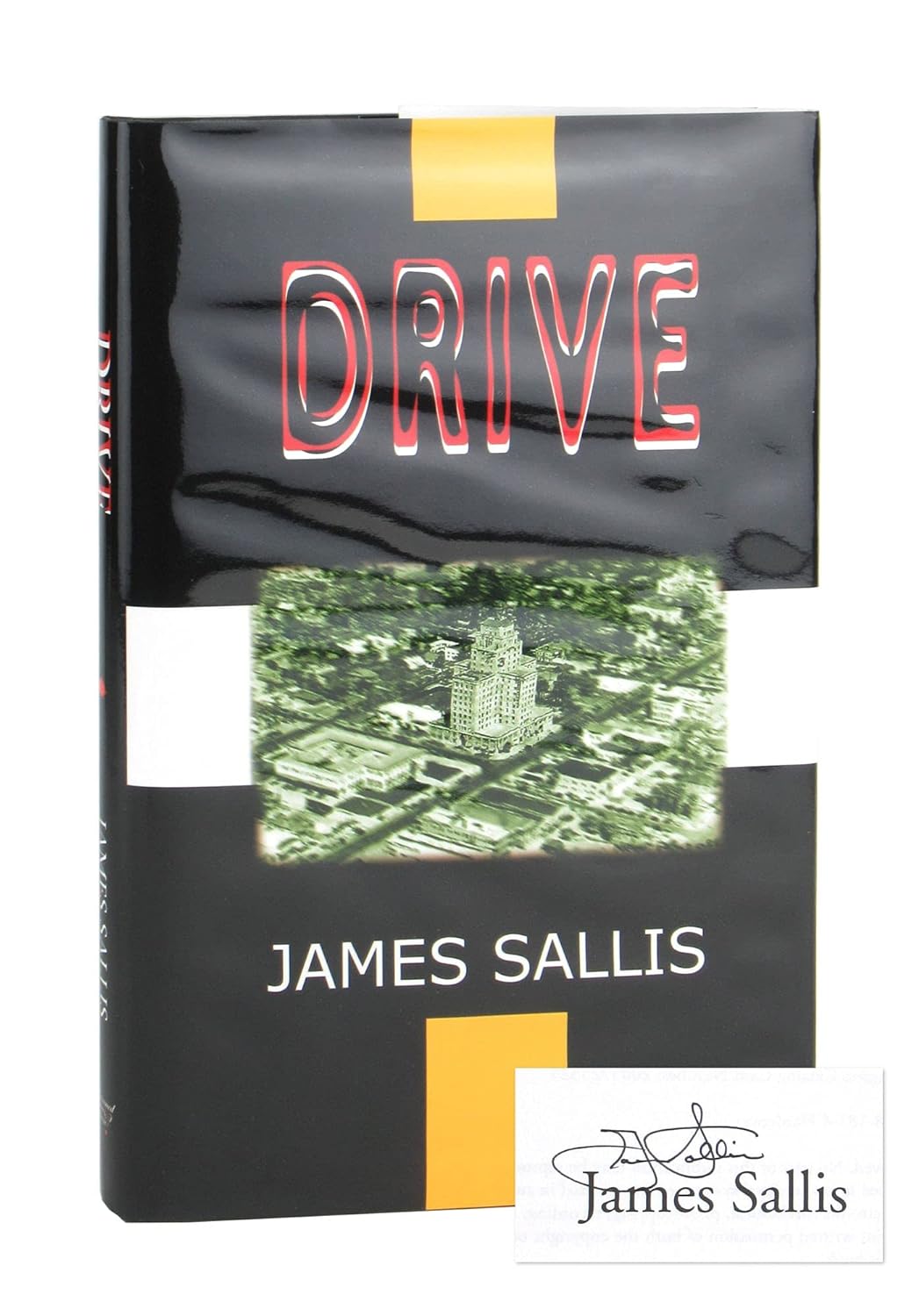
A resource for those who collect George R. Stewart books, or books by other authors.

Antiques Road Show often shares good tips for collectors.  One such tip, broadcast about a year ago, led to a lover of books who has set up a small company that produces and sells reproductions of classic book covers.  It’s a wonderful way to protect your historic bound books.

Here’s a link to the section of his site devoted to George R. Stewart books:  http://www.facsimiledustjackets.com/cgi-bin/fdj455/4127.html

You can easily get to the main page of the site from the Earth Abides/ GRS section.

Some collectors have mixed feelings about using such reproduction covers, fearing that they might be used as forgeries, or because of copyright concerns.  But the scholar who runs the company is careful to note on each cover that it is a facsimile, so these covers cannot be used as forgeries; and none of these covers have been produced or used for several decades — the books have been updated with new covers several times — so there will be no loss of income to publisher or author or agent through the use of these older covers for your old books.

Mark Terry, the artist/scholar who is keeping these beautiful covers alive, has many more covers than the 9,000  on the site — 40,000 now — so if you’re interested, send a request through his site.

Even if you have an original cover — and I’m luck to have two for my first editions/first printings of Earth Abides — a facsimile cover is a good way to protect those valuable books.

Link

Jack Stewart’s Obituary in the San Jose Mercury-News

The  obituary gives a fine overview of Jack’s remarkable career.  He was the pre-eminent geologist for much of the land that John Wesley Powell first surveyed in the nineteenth century.  Powell later established the United States Geological Survey, where Jack worked for his entire professional career.  Sadly, the obit does not mention the work he did on his father’s books — designing a faux national forest for Fire, then mapping it; doing photography for US 40; and helping with field research at “Sheep Rock.”  A modest man, Jack did not publicize these contributions to literature.  But it is important  to share this part of his distinguished legacy.    It is also important to note that, like his father and mother, Jack chose public service over a potentially lucrative private career.   In doing so, Jack, like many of his and my generation, modeled an excellent example of working virtuously for the public good.

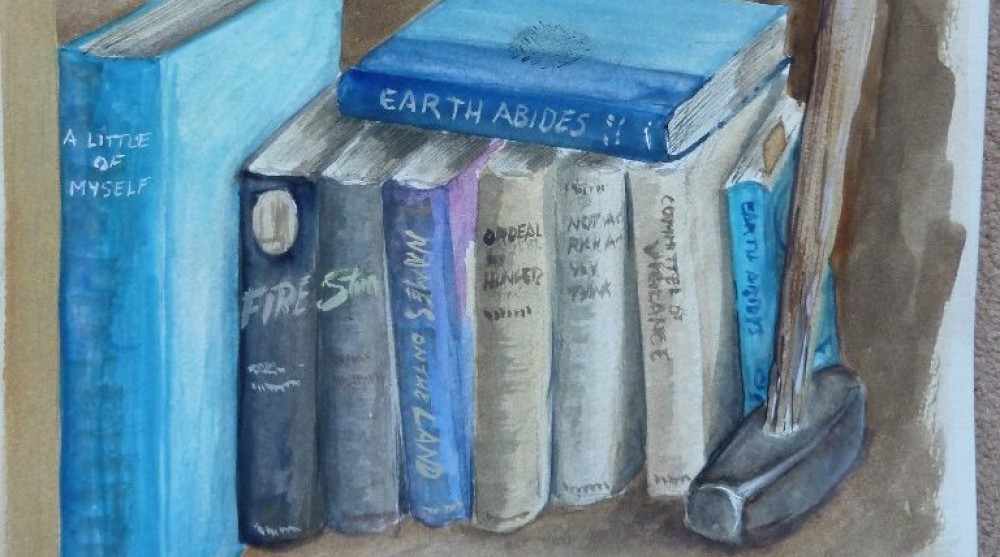
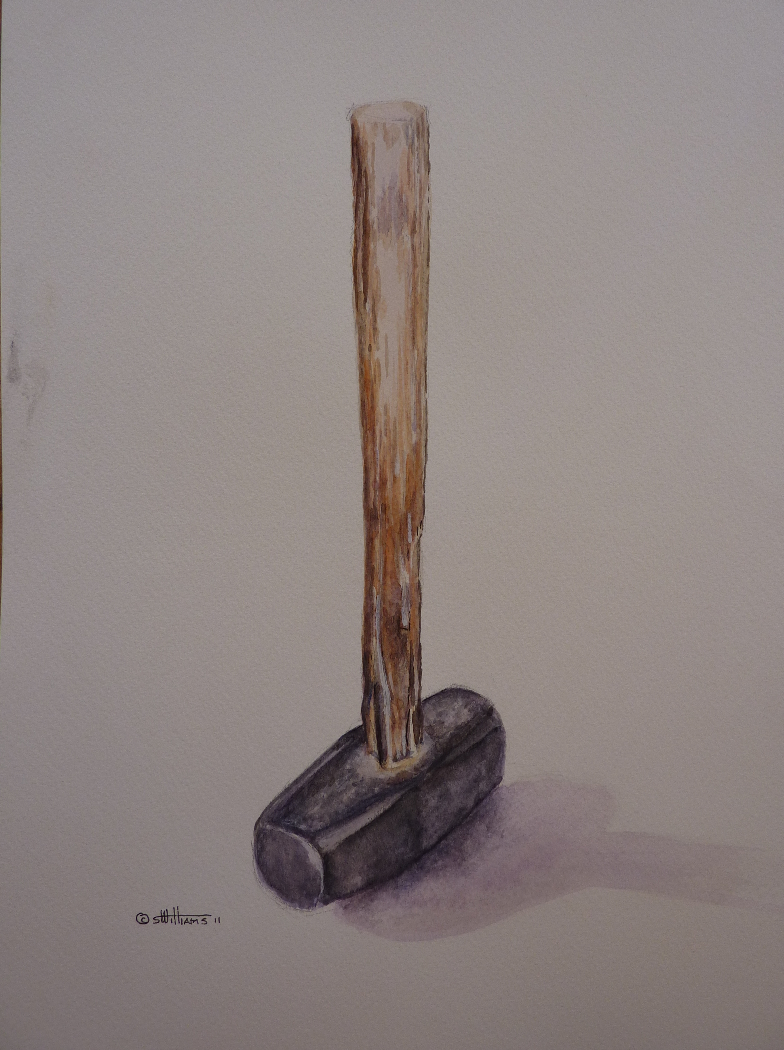
Finally,  there is this: At the moving conclusion of Earth Abides, Ish hands his Hammer to Jack.  In the same way, when George R. Stewart died, he left the Hammer of Ish to his son, Jack.  That symbolic act shows the importance of our friend and colleague, Jack Stewart.The Hammer of Ish2 copy

BUY THE LIFE AND TRUTH OF GEORGE R. STEWART FOR ANDROID

If you’d like to read the book, don’t use Kindle, and don’t want to pay the price for the printed version, you can now order it for Android.  The price is the same as the Kindle price, $19 and change.

Here’s the link to the Android eBook:

https://play.google.com/store/books/details/Donald_M_Scott_The_Life_and_Truth_of_George_R_Stew?id=tcm9gxH5IWwC&feature=nav_result#?t=W251bGwsMSwxLDMsImJvb2stdGNtOWd4SDVJV3dDIl0.

Like the Kindle version, this version can also be read on a PC.


Bob Pavlik’s Review of The Life and Truth of George R. Stewart

Bob Pavlik has just sent a copy of his review of the GRS Biography.  With his kind permission, I’ll post it here.

Bob recently won the California State Governor’s Award for Historic Preservation, a well-deserved honoring of his long career in preserving the history of this place.

Donald M. Scott, The Life and Truth of George R. Stewart: A Literary Biography of the Author of Earth Abides. Jefferson, North Carolina: McFarland Publishing Company, 2012; photographs, notes, bibliography, 246 pages, $55 softcover, available at www.mcfarlandpub.com or by calling (800) 253-2187; or on Kindle at http://www.amazon.com/Life-Truth-George-Stewart-ebook/dp/B00AQCEY0O/ref=tmm_kin_title_0

Reviewed by Robert C. Pavlik

The times, trials, travels and accomplishment of George R. Stewart (1895-1980) are well documented in this engaging biography, written by a longtime student and admirer of the former UC Berkeley English professor.

Stewart was a Pennsylvania native whose family was acquainted with another writer and California emigrant, the poet Robinson Jeffers. Stewart grew up in southern California but went east for his education, earning his A.B. degree at Princeton in 1917 before joining the U.S. Army. Following a medical discharge he enrolled at UC Berkeley for his M.A. (his thesis was about another writer and traveler, Robert Louis Stevenson), before finishing his studies at Columbia University. Stewart took a break for a 3,181 mile bike trip through the United Kingdom and Europe; he was a peripatetic who would later put his rambles to work in several well regarded books.

Following his graduation with a Ph.D. from Columbia, Stewart took a job at the University of Michigan, where he met his future wife, Theodosia (also known as “Ted”). In 1923 he moved to Berkeley (and witnessed the great fire of September 1923), where he assumed a professorship that would last for 39 years. The couple was married the following year in Ann Arbor, and had two children, Jack and Jill, who were raised in the Berkeley Hills as well as in a writer’s cabin in the Sierra Nevada, and on the road while their father conducted his research for his many books.

Stewart had a strong sense of place when writing his non-fiction and his many novels; in that sense, he pre-dated the venerable Wallace Stegner by several years.  Later, the two men came to be friends, visiting each other at the homes across the San Francisco Bay from one another. Stewart conducted extensive field work for Ordeal by Hunger­, for many years the standard account of the Donner Party. His clear affection for the Sierra Nevada led to two more stories set there, Storm and Fire, both paying homage to the workers who face natural (and sometimes human caused) challenges with courage and aplomb. Stewart loved to drive, crossing the country on U.S. 40 several times for his photographic essay of the same name. As an odologist Stewart wrote the first nationwide treatment, Names on the Land, encompassing an impressive array of place names all across the United States. And, as a conservationist and close observer of the events surrounding the dropping of the atomic bomb, he wrote a science-fiction treatment of life in the Bay Area following a worldwide cataclysmic event.  Earth Abides takes its name from a passage in the Bible, but even the Good Book ceases to hold meaning for the post-apocalyptic survivors in this classic story. Stewart even played a critical role in the loyalty oath controversy that roiled the University of California in the 1950s; his book, The Year of the Oath is regarded by Scott as “a classic study of the fight to preserve our civil liberties and a testament to academic freedom…” (p. 127). At the end of the 1950s Stewart was drawn to another conflict, in another century: the Civil War and the Battle of Gettysburg.  He focused on 15 hours of those three days, when Confederate General George Pickett led 10,500 men in an attack on Union forces. Scott write, “In Pickett’s Charge, his last book of the first decade of the Oath, Stewart asked a question which grew out of the time: ‘In a sense, even the charge may stand for all of human life. Some time in the years, if not daily, must not each of us hear the command to rise and go forward, and cross the field, and go up against the guns?’”

The more you learn about George R. Stewart, the greater your admiration will grow.  You’ll also learn something about the biographer (Don Scott), and you’ll admire him, too, for his persistence as well as his enthusiasm. Scott was a California State Park Ranger at Thornton State Beach in Daly City (south of San Francisco) where he got to know the Stewarts in the 1970s, and where a trail was dedicated to the prolific author and Professor Emeritus, who died in August 1980. Wallace Stegner considered the naming of this trail as one of the highest honors Stewart received during his lifetime. Another honor, albeit posthumous, is this fine biography.

Robert C. Pavlik is the author of Norman Clyde: Legendary Mountaineer of California’s Sierra Nevada (Heyday Books and the Yosemite Association, 2008) and a Thornton State Beach alumnus.